
Industrial Laundry Detergents in Qatar A Buyers Guide for Hotels and Laundries
Clean linen is one of the quiet details that guests notice immediately. A towel that feels harsh, a sheet with a faint stain, or a uniform that smells of kitchen grease can affect the whole experience. For hotels, commercial laundries, serviced apartments, spas, gyms, and catering operations in Qatar, detergent choice is not a small purchase. It affects stain removal, fabric life, machine performance, water use, labour time, and total laundry cost.
Qatar also brings specific laundry challenges. High room turnover, warm weather, heavy towel use, food and beverage stains, sunscreen, spa oils, and the need for bright white linen all place pressure on laundry operations. The right industrial laundry detergent should perform consistently under these conditions without damaging fabrics or overloading machines with residue.
This guide explains what to look for when choosing industrial laundry detergents in Qatar, how to compare suppliers, which product types are commonly used, and how to protect laundry equipment over the long term.

Why industrial laundry detergents need a different buying approach
Domestic detergent is not suitable for a hotel or commercial laundry workload. Industrial laundry detergents are designed for larger machines, heavier soil loads, controlled dosing, and repeated washing of the same fabric stock.
A hotel laundry may wash thousands of towels, sheets, pillowcases, tablecloths, napkins, bathrobes, kitchen uniforms, and staff garments every week. A standalone laundry business may handle an even wider mix, including abayas, kanduras, delicate garments, restaurant linen, salon towels, and healthcare-related textiles where permitted by its process.
Commercial detergents usually form part of a wider wash system that can include:
Main detergent
Alkali builder
Emulsifier or degreaser
Oxygen or chlorine bleach
Neutraliser
Fabric softener
Stain removers
Disinfecting laundry additives where required
Descaling or machine cleaning products
The aim is not simply to use a stronger soap. The aim is to build a wash process that removes soil, protects textiles, controls whiteness, works with local water conditions, and keeps costs predictable.
Key factors to consider before choosing a detergent
The best detergent is the one that performs well in a specific laundry operation. Before signing with a laundry detergent supplier Qatar hotel teams should assess stain types, fabric mix, machine capacity, dosing method, water conditions, and delivery support.
Performance on tough stains
Hotels and laundries face a wide range of stains. One detergent rarely solves every problem on its own, so performance should be judged by the whole chemical programme.
Common stains in Qatar hospitality laundry include:
Body oils and perspiration on sheets and pillowcases
Makeup, sunscreen, and spa oils on towels and robes
Tea, coffee, juice, and sauce on table linen
Cooking oil, grease, and spices on kitchen uniforms
Shoe polish and dust on staff garments
Rust or mineral marks from water, trolleys, or fixtures
For tough hospitality stains, look for detergents that include or work well with:
Surfactants
These lift oils and general soil from fabric.
Enzymes
These help break down protein, starch, and fat-based stains. They work best within the right temperature and pH range.
Alkali builders
These improve soil removal, especially for greasy and heavily soiled items.
Oxygen bleach
This helps maintain whiteness and remove coloured stains on many white and colourfast fabrics.
Special emulsifiers
These are useful for kitchens, spas, massage centres, and food service operations.
A good supplier should help run wash trials using real stained linen from the property or laundry. Test results should be judged after drying, not only when items leave the washer. Some stains become more visible after heat drying.
Environmental impact and sustainability
Sustainability is now part of procurement in many Qatar hotels, especially international brands and properties working towards internal environmental targets. Laundry is a high-use area for water, energy, and chemicals, so detergent selection can make a measurable difference.
More sustainable detergent choices may include:
Concentrated liquid products that reduce packaging and transport volume
Low-temperature detergents that reduce hot water use
Phosphate-free or lower-phosphate formulations where suitable
Readily biodegradable surfactant systems where available
Controlled dosing to prevent overuse
Returnable drums or bulk containers
Products supplied with safety data sheets and clear handling guidance
Sustainability should never come at the cost of rewash rates. If a weaker detergent causes more failed washes, the laundry uses more water, electricity, labour, and fabric life. A better approach is to choose a chemical programme that cleans effectively at the lowest practical wash temperature and dosage.
Cost-effectiveness and bulk purchasing
The cheapest drum on the shelf is rarely the cheapest detergent in use. Industrial laundry buyers should compare cost per kilogram of linen washed, not only price per litre or price per drum.
When calculating value, include:
Dosage per wash
Number of rewashes
Water and energy needs
Linen replacement rates
Machine downtime
Chemical wastage from manual dosing
Delivery charges and minimum order quantities
Staff time spent treating stains by hand
Bulk purchasing can reduce unit cost, especially for high-volume hotels and commercial laundries. Still, storage must be planned carefully. Chemicals need safe, ventilated areas, proper labelling, spill control, and stock rotation.
Ask suppliers about:
Drum, jerrycan, and bulk container options
Automatic dosing systems
Regular delivery schedules across Qatar
Emergency stock availability
Product training for laundry teams
Compatibility with existing machines
Technical visits when wash quality drops
A reliable detergent supplier qatar businesses can trust should provide more than periodic deliveries. Technical support matters when stains increase, water conditions change, staff turnover affects dosing, or new linen is introduced.
Compatibility with fabrics and washing machines
Industrial laundry detergents must match both the fabric and the machine. Too harsh a programme can shorten linen life. Too mild a programme can lead to greying, odour, and rewash.
Common hospitality textiles include:
Fabric or item | Laundry concern | Detergent approach |
Cotton towels | Body oils, greying, stiffness | Strong soil removal, correct softening, residue control |
Cotton-rich sheets | Whiteness, skin contact, fabric life | Balanced detergent, oxygen bleach where suitable |
Polyester-cotton uniforms | Grease, odour, colour care | Emulsifier support, colour-safe process |
Table linen | Food stains, wine, sauces | Pre-spotting plus bleach-compatible wash |
Microfibre cloths | Residue, loss of absorbency | Avoid excess softener, rinse well |
Delicate guest garments | Shrinkage, dye loss, claims risk | Separate process, milder products, care label checks |
Machine type also matters. Washer-extractors, tunnel washers, barrier washers, and smaller commercial machines have different chemical and water requirements. Automatic dosing can improve consistency, but only if it is calibrated and maintained.
Check detergent compatibility with:
Front-loading commercial washer-extractors
High-spin machines
Ozone laundry systems, if used
Low-temperature wash programmes
Automatic liquid dosing pumps
Stainless steel machine parts and rubber seals
Local water quality and hardness levels
Qatar’s water supply is largely desalinated, then treated and distributed. Water characteristics can still vary depending on storage tanks, building systems, and internal pipework. That means laundries should test water hardness, pH, and total dissolved solids rather than rely on assumptions.
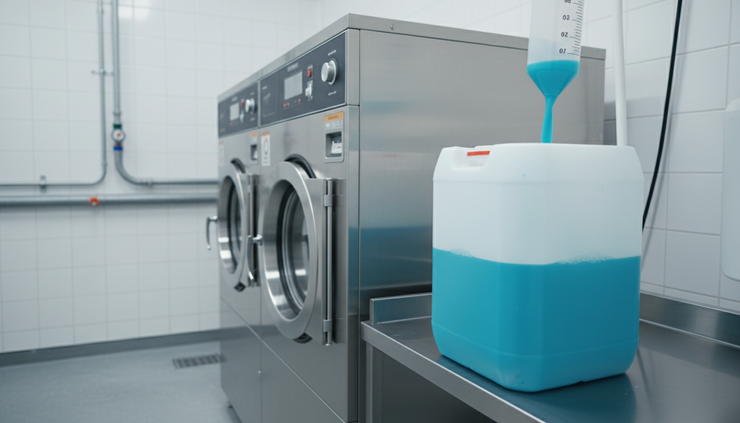
Common detergent types used by hotels and laundries in Qatar
Industrial laundry detergent is not one single product. Most professional laundries use a combination of products, chosen by soil level, linen type, machine type, and required finish.
Liquid detergents
Liquid detergents are widely used in commercial laundries because they are easy to dose automatically. They dissolve quickly, work well in controlled systems, and reduce the issue of undissolved powder residue.
They are well suited to hotels that want consistent results across shifts. They also reduce manual handling when connected to dosing pumps.
Powder detergents
Powder detergents can offer strong cleaning performance and may be cost-effective for some laundries. They need proper storage in dry conditions, careful measuring, and full dissolution in the wash.
Powders may be useful for certain high-soil applications, but manual dosing can create inconsistency if staff are not trained.
Enzyme detergents
Enzyme-based detergents help with stains such as food, sweat, blood, dairy, and oils, depending on the enzyme type. They can support good results at moderate temperatures.
They need correct wash conditions. Excessive heat or the wrong pH can reduce enzyme performance.
Low-temperature detergents
Low-temperature systems help reduce energy use and protect some fabrics. They work best when paired with suitable chemistry, correct wash time, and good mechanical action.
They are useful for hotels trying to reduce utility costs, but they should be tested against actual stain loads before adoption.
Fabric softeners and neutralisers
Softener affects guest comfort, especially for towels and robes. Overuse can reduce absorbency and leave residue.
Neutralisers help bring fabric pH down after alkaline washing. This matters for guest comfort, fabric feel, and preventing skin irritation complaints. A laundry should measure final rinse pH regularly, especially for towels and bed linen.
Popular laundry detergent brands and suppliers available in Qatar
Qatar’s hospitality and laundry market is served by a mix of international chemical brands, regional distributors, and local suppliers. Availability can vary by stock, contract, and product line, so buyers should confirm the current range before making a decision.
Brands and product families commonly seen in professional laundry markets across the Gulf include:
Brand or product family | Typical strengths | Buyer note |
Diversey and Clax laundry systems | Full commercial laundry programmes, dosing systems, hotel-grade support | Often used by hospitality and institutional laundries |
Ecolab laundry solutions | Commercial chemical systems, technical support, hygiene-focused programmes | Common in hotels and food service-linked operations |
Christeyns laundry products | Industrial laundry chemicals for linen, garments, and specialist uses | Suitable for laundries seeking tailored wash programmes |
P&G Professional and Ariel Professional | Recognised detergent name, broad cleaning use | Check suitability for machine size and dosing method |
Henkel and Persil Professional | Recognised laundry chemistry and fabric care products | Confirm local commercial pack availability |
Regional and local private-label suppliers | Competitive pricing, flexible supply, local stock | Test carefully for consistency, support, and documentation |
Do not choose by brand name alone. A well-known product used incorrectly can perform worse than a less famous product supported by proper dosing, training, and service.
For hotels, supplier quality should be scored on service as much as chemistry. A suitable partner should provide safety data sheets, product labels, dosing charts, staff training, machine compatibility checks, and practical advice when stains or odours appear.

How to compare suppliers before signing a contract
A detergent contract should support daily laundry performance, not lock the operation into a product that no longer fits. Before choosing a supplier, compare each option through a structured trial.
A useful supplier evaluation should include:
Wash trial with real linen
Use stained towels, sheets, table linen, and uniforms from the actual operation. Include both white and coloured items.
Dosing calculation
Ask for clear dosage per kilogram of dry linen. Compare the cost per wash load and cost per kilogram.
Rewash tracking
Measure how many items need washing again. A lower chemical price can quickly lose value if rewash rates rise.
Fabric feel and whiteness
Check towels for softness and absorbency. Check sheets for brightness, smell, and skin feel.
Machine inspection
Look for foam, residue, scale, blocked pipes, and dosing leaks during the trial.
Training and documentation
Confirm that the supplier can train laundry staff in safe handling, stain sorting, and correct product use.
Delivery reliability
For Qatar operations, stock availability matters. Hotels cannot pause laundry during peak occupancy because a chemical delivery is late.
A practical scoring table helps procurement, housekeeping, engineering, and laundry teams compare options fairly.
Evaluation area | What to check | Why it matters |
Cleaning result | Stain removal, odour control, whiteness | Protects guest experience |
Fabric care | Texture, colour care, linen life | Reduces replacement cost |
Total cost | Dosage, rewash, energy, delivery | Shows real operating cost |
Safety | Labels, SDS, staff training | Reduces handling risk |
Support | Site visits, dosing setup, problem solving | Keeps quality consistent |
Supply | Stock levels, delivery timing, bulk options | Prevents disruption |
Tips for maintaining laundry equipment
Even the best detergent cannot compensate for poorly maintained equipment. Machines, dosing pumps, water systems, and dryers all affect wash quality.
Keep dosing systems calibrated
Automatic dosing pumps should be checked on a set schedule. Tubes can wear, pumps can drift, and blocked lines can reduce chemical flow. Too little detergent causes poor cleaning. Too much detergent leaves residue, wastes money, and may irritate skin.
Keep a simple calibration log with date, product, target dose, actual dose, and technician name.
Control foam and residue
Excess foam reduces mechanical action inside the washer. It can also cause drainage issues and poor rinsing. Foam may come from overdosing, the wrong detergent, soft water, or residual chemicals in fabric.
If towels feel waxy or lose absorbency, check for detergent and softener build-up.
Descale and clean machines
Scale, lint, and chemical residue reduce machine performance. The correct descaling schedule depends on water quality, wash temperature, and chemical programme. Use products approved for the machine type and follow manufacturer guidance.
Door seals, drain valves, detergent inlets, and filters need regular attention.
Maintain water storage and supply
Building water tanks and internal pipework can affect laundry results. Rust, sediment, or inconsistent water pressure may cause staining, poor rinsing, or dosing variation.
If unexplained stains appear across many items, check water quality before blaming the detergent.
Train staff on sorting and loading
Overloaded machines cannot clean properly. Underloaded machines waste water and chemicals. Staff should know how to sort by colour, fabric, soil level, and item type.
Kitchen uniforms should not run in the same programme as lightly used bed linen. Microfibre cloths should not be treated like cotton towels. Guest garments need separate care based on labels and risk.

Practical buying checklist for Qatar hotels and laundries
Before placing an order, confirm these points with the supplier and internal laundry team:
Main stain types handled each week
Fabric categories and any delicate items
Washer type, capacity, and dosing method
Water hardness, pH, and supply consistency
Required wash temperatures
Desired whiteness and softness standards
Accepted bleach types for each fabric
Chemical storage space and safety controls
Staff training needs
Bulk pack size and delivery frequency
Safety data sheets and product labels
Trial results on real linen
Cost per kilogram of linen washed
Supplier response time for service issues
For current laundry washing detergent options in Qatar, including products for hospitality and commercial laundry use, visit Amirco International’s laundry detergent product page.
FAQ
What is the best detergent for hotel laundry in Qatar?
The best choice depends on the hotel’s linen mix, stain types, machines, water quality, and wash temperature. Most hotels need a complete chemical programme rather than one detergent. A site trial with real stained linen is the safest way to choose.
Are liquid detergents better than powder detergents for industrial laundry?
Liquid detergents are often easier to dose automatically and dissolve quickly. Powder detergents can still be effective and cost-efficient in some operations. The better option depends on machine setup, staff handling, storage conditions, and required cleaning performance.
How can a laundry reduce chemical costs without lowering quality?
Measure cost per kilogram of linen, not just product price. Calibrate dosing pumps, reduce rewashes, sort linen correctly, avoid overloading machines, and use the right wash programme for each fabric type.
Should hotels use eco-friendly laundry detergents?
Hotels can benefit from concentrated, lower-temperature, and lower-impact detergents when they still meet cleaning standards. The key is to avoid products that increase rewashing, as that can waste more water and energy.
How often should laundry dosing equipment be checked?
Dosing systems should be checked regularly, with frequency based on laundry volume and supplier guidance. High-volume hotel laundries often need routine inspection because worn tubes, blocked lines, or pump drift can quickly affect wash quality.

The takeaway for better laundry results
Industrial laundry detergent buying should balance cleaning power, fabric care, sustainability, machine compatibility, and total cost. A strong product matters, but the full system matters more. That includes correct dosing, water checks, stain sorting, safe storage, supplier support, and regular equipment maintenance.
For hotels and laundries in Qatar, the right detergent partner should help protect guest satisfaction and operating margins at the same time. Choose based on tested results, not claims on a label, and review performance often as linen, occupancy, staff, and washing conditions change.


Comments